

How To Start A Gym From Scratch
In my experience, there's no such thing as a unique first-time gym owner — they all walk in with the same story. You're asking about starting from scratch? I've sat across from more newbies than I can count, and I've seen the same move every single time: someone prints a 'Start Your Own Gym' PDF off the internet, calls it a business plan, then looks at me like I'm the reason their numbers don't add up. Honestly, I've seen too many people trust a generic checklist written by someone who's never hauled a single dumbbell up two flights of stairs. A client last month did exactly that — 25 pieces of cardio that wouldn't even fit through his second-floor door. So what's the alternative here? We build this the way I'd build it if it were my own money on the line, not some blogger's.
Opening a gym is a serious business decision. The fitness industry runs on thin margins, and most failures trace back to mistakes made in the first six months of planning. This guide walks through the entire process—from the first property tour to your final staff hire—so you can avoid the common traps.
This is written as a practical checklist. Use it to build your business plan, and refer to it during every phase of construction and launch.
Phase 1: Market Research and Business Model
Before you look at a single piece of equipment, define your niche. A 10,000 sq ft health club and a 2,000 sq ft strength studio require completely different strategies.
· Identify your target member. Are you serving serious powerlifters, general fitness beginners, or corporate 9-to-5ers? This determines your equipment list and operating hours.
· Analyze the local competition. Drive by existing gyms during peak hours. Note their parking lots and class schedules. Look for gaps—maybe nobody offers childcare or extended weekend hours.
· Decide on your revenue model. Will you run on monthly memberships, class packages, or personal training fees? Most new gyms need a mix of these to survive the first 18 months.
Phase 2: Site Selection and Layout
Location is the hardest fixed cost to change later. Don't rush this decision.
Ceiling Height and Flooring
Your space needs at least 3 meters of clear ceiling height. This is non-negotiable for power racks, Smith machines, and assisted chin/dip stations. If members can't do overhead presses or pull-ups without hitting beams, your layout will feel cramped and unprofessional.
Check the subfloor. Is it level concrete? Uneven floors will wreak havoc on plate-loaded machines and leg press equipment. Rubber flooring is a must—look for 20mm to 30mm interlocking tiles for the free-weight zone.
Zoning Your Floor Space
Separate your zones logically. Cardio machines should face a window or a screen wall, not a concrete pillar. Heavy free weights go in the back corner. Selectorized strength machines line the middle aisles, with clear pathing to the locker rooms.
Draw a plan to scale on paper. Every machine needs a clearance zone of at least 60cm on the sides for comfortable entry and exit.
Phase 3: Budgeting and Financing
You need a realistic start-up budget and a separate operating reserve to cover your first six months of rent and payroll.
· Three-way estimate. Get written quotes for construction, equipment, and initial marketing costs. Compare at least three vendors in each category.
· Add a 15% overrun buffer. Plumbing for locker room showers ALWAYS costs more than the quote.
· Prepare a 12-month cash flow projection. Be conservative on membership sales. A gym that hits 60% of its projected first-year revenue is doing well.
You do not need to buy top-tier everything on day one. It does mean prioritizing heavy-use items where durability prevents costly downtime and safety issues.
Phase 4: Equipment Procurement
This is where your facility comes to life, and where you'll sink a substantial chunk of your budget. The goal is a balanced floor that serves your target demographic without unnecessary extras.
Strength Training Foundation
Start with the core power movements. Invest in at least two TH004 POWER RACK units and a quality for controlled squats and presses.
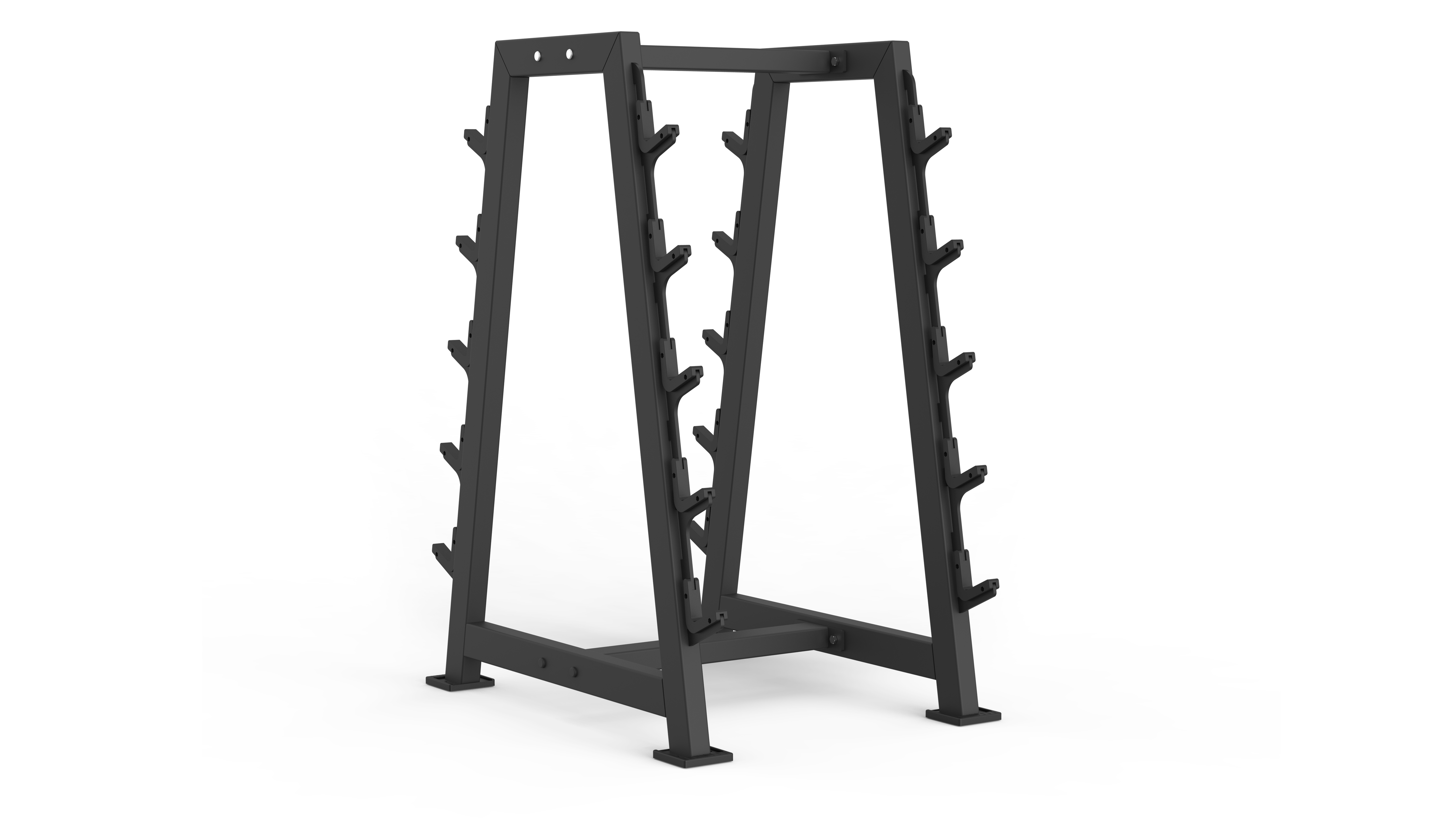
You'll need olympic bars and bumper plates. Look for a XVD009 BARBELL RACK to keep bars organized and off the floor. Don't forget weight plate storage—a ZH041 WEIGHT PLATE TREE keeps safety and tidiness in check.
Selectorized Strength Machines
These are the bread and butter for beginners and general members. They guide movement patterns and are safer for solo training. Look for a full line that covers all major muscle groups.
Prioritize a chest press like the GW001 CHEST PRESS and a GW002 PEC FLY model. For back development, your lineup should feature a GW012 LAT PULL DOWN machine and a corresponding seated row, such as the GW004 SEATED ROW. These four pieces form the core of any upper-body circuit.
Leg day needs attention, too. A GW014 LEG EXTENSION machine is essential for quad isolation. Pair it with a dedicated hamstring curl unit like the GW013 SEATED LEG CURL. If you have budget for one premiere lower-body piece, opt for a leg press such as the GW015 LEG PRESS—it takes pressure off the lower back while still loading the quads and glutes heavily.
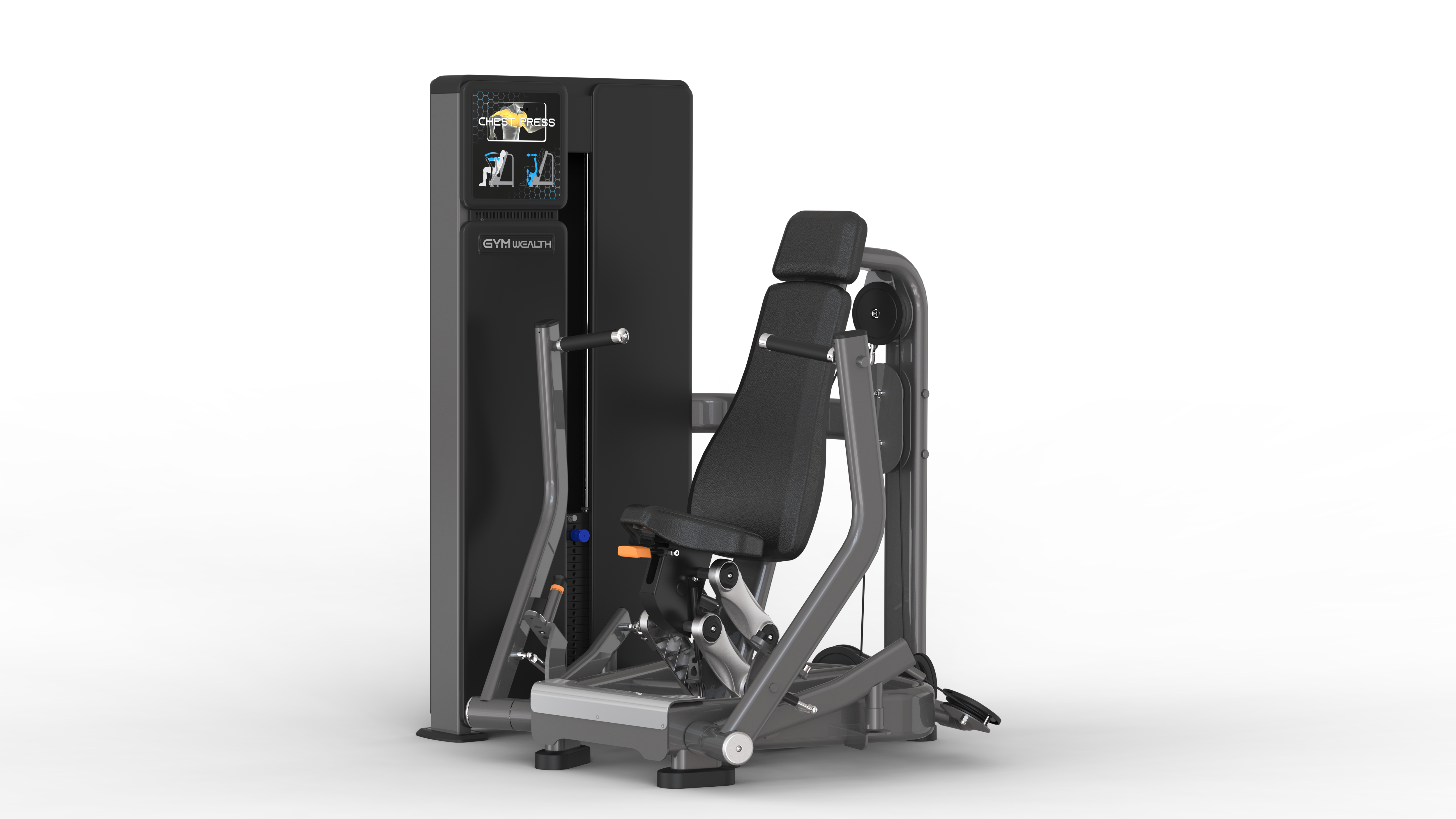
Plate-Loaded and Advanced Lines
For serious lifters, plate-loaded levers are non-negotiable. Aim to have at least one iso-lateral press and one row. Models like the MTS001 ISO-LATERAL DECLINE PRESS and the MTS004 ISO-LATERAL ROW allow independent arm movement that fixes strength imbalances.
You also need dedicated equipment for core and functional work. An GW008 ASSISTED CHIN/DIP is a fantastic unit because it serves both beginners who need help and advanced users who want to add weighted reps. For posterior chain and rehab work, look into a lower back extension machine like the SF90 009 LOWER BACK—crucial for balance and core programming.
Looking to maximize floor efficiency? Multi-station machines are worth exploring. The TH49C 4 STATION lets four members train simultaneously on different movements, reducing your cost per square foot significantly.

Cardio Equipment
Treadmills are still the most-used machines in a commercial gym. Buy commercial-grade units with strong warranties, like the XM750T SCREEN PROJECTION COMMERCIAL TREADMILL—the entertainment screen adds massive perceived value.
Diversify your cardio deck. Include indoor cycles like the MD01 INDOOR BIKE and steppers to offer low-impact alternatives for older members and those with joint issues.

Phase 5: Hiring and Staffing
Your equipment is dead weight without a competent team to guide members and build culture.
Key Hires
· Operations Manager. This person lives in your gym during peak hours. They handle complaints, cleaning schedules, and shift management.
· Certified Trainers. You need trainers who can conduct inductions and sell sessions. Look for recognized certifications like ACE or NSCA.
· Front Desk Staff. They control the first impression. Hire for attitude and customer service—you can train software skills later.
Create a training manual before day one. Standardize how equipment is cleaned, how to handle a medical emergency, and the script for giving tours. Consistency builds trust.
Phase 6: Pre-Sale and Operations
Marketing starts before your doors are open. Use a pre-sale period to generate buzz and cash flow three to four weeks before launch.
Launch Strategy
Offer founding member rates with lifetime discounts. Put up an A-frame sign outside your location stating "Opening Soon—Founding Rates Available." Create social media profiles and post daily construction or equipment installation updates.
On day one, focus on a soft opening. Invite friends, family, and early sign-ups. This gives your staff a chance to run the floor without the pressure of full public scrutiny.
Daily Operations
Implement a strict maintenance schedule. Wipe down machines hourly, check cable tension weekly, and lubricate moving parts monthly. A broken machine is a safety hazard and an unhappy member.
Track your retention metrics monthly. Look at your churn rate—anything above 6% per month is a warning sign. Just as you invested in high quality, commercial-grade machines for your floor, consider how to deliver an equivalent level of quality in your customer service experience.
Starting a gym is a marathon, not a sprint. Keep your operation lean, your equipment commercial-grade, and your service standards high. That combination gives you the best odds of thriving beyond the first year.